Step 3 - Soil Preparation
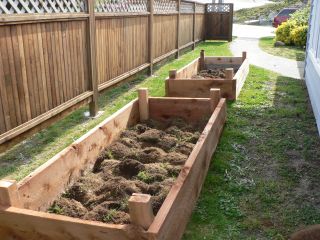
Soil preparation is one of the most important steps to having a successful vegetable garden. The best garden soil is fertile, well drained yet retains moisture, and gets enough air circulation which is needed for healthy roots.
Find more information on what are your soil types.
Early spring is the time to start preparing your soil. Starting with soil testing will tell you how much nitrogen, phosphorus, potassium you have in your soil and what the pH (a measure of acidity and alkalinity) is.
From these results you can tell what soil amendments are needed for the best plant growth.
Steps in soil preparation:
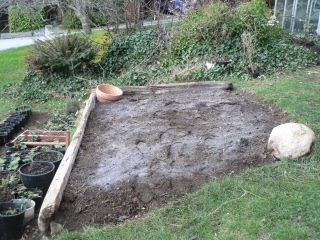
When starting a new
garden site
these are the steps to follow:
- Remove any grass.
This is done if you are starting a new garden site from an existing grassy area. - Plow, spade or rototill the area.
Make sure the soil is ready to work, if it is too wet or too dry you will harm the soil structure. To test the soil take a handful and squeeze it. If it stays in a ball it is too wet. If is is powdery or has hard clumps it is too dry. If it crumbles freely it is just right. Another sign is if you are turning the soil with a spade and the soil sticks to the end of the tool it is too wet to work. If the soil is too wet wait a week and do your test again. - Break down any large clumps
Clumps may be left after you rototill, so break these up with a hand cultivator or garden fork. - Apply manure or compost and soil amendments.
Add well rotted manure or compost and dig this into the top few inches of soil with a hand cultivator or rake.for the Roots area - add 1/2 - 1 inch
for the Brassicas area - add 2 inches
for Everything else - add 2-3 inches. Learn more about the above groups at vegetable garden layout.
From your soil test find out if your soil needs any of the basic nutrients and add accordingly. - Add in lime
Only lime the area where you will be planting your brassica group. If you have really acidic soil (pH below 5.5) you can lime the "everything else" group as well but do not lime the "root" group area. It is best to lime 1 month after you have added manure or compost to your garden soil. Use 6 lbs per 100 sq feet if clayey soil, 4 lbs per 100 sq feet if loamy soil, 2 lbs per 100 sq feet if sandy soil. - Rake the bed.
This is done to make the bed smooth and level. Pick out any large debris or small stones. You want the soil to be the consistency of coarse breadcrumbs, especially if your are planting vegetables with fine seeds.
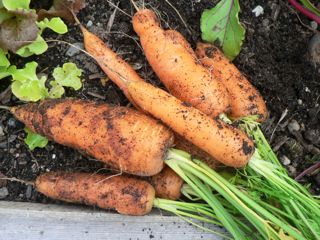
Once your soil preparation is complete your next step in planting a vegetable garden is selecting and planting your vegetable seeds.
Return from Step 3 - Soil Preparation to Planting a Vegetable Garden


