Step 6 - Vegetable Harvest
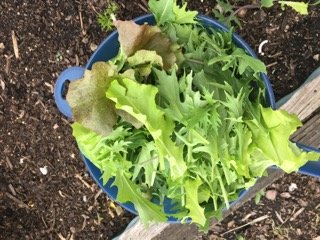
A successful and abundant vegetable harvest is the reward for all the work and time you have put into your garden. Eating fresh veggies is probably the greatest reward.
It is important to keep observing your plants to tell when they are ready for harvesting. If you pick too early the vegetables may lack in size, flavour or sweetness; if harvested too late they loose flavour and can be tough or mushy.
It is important to harvest vegetables when they are at their prime to get the best taste.
How do you know when a vegetable is ready to be harvested?
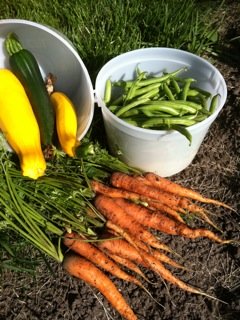
Every vegetable plant has a different life span and way of growing our food. Some produce food above ground where others produce below ground.
With the above ground vegetables you can see what the vegetable looks like so you have a visual as to whether or not they are ready to be harvested. You can also feel them for fullness.
Below ground are more difficult, for example potatoes can be harvested early or later, the potato just changes size.
Other info for best Vegetable Harvest:
- Some you harvest only once at the peak of ripeness like corn.
- Others you can harvest several times like beans and Swiss chard if harvested regularly they will keep producing.
- Some stay in the garden longer than others like carrots and celery.
- The flavour of kale and cabbage is enhanced after a frost.
- Some vegetables preserve better than others like tomatoes.
- Still others do not store well like spinach.
- Learn the best time to harvest specific vegetables using this vegetable list.
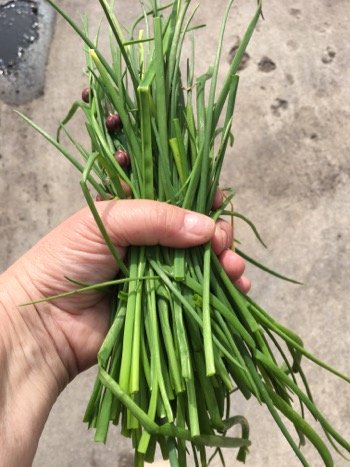 Freshly picked chives.
Tips for Storing Vegetables:
Now that you have started your vegetable harvest,
you may have more than you can use or give away. What do you do with
the extras? Proper storage is needed for vegetables to retain their
taste, freshness and nutrients.
Store these vegetables in a cool area, away from bright light:
- onions
- potatoes
- sweet potatoes
- rutabaga
- winter squash
Store these vegetables in a closed plastic bag or crisper in the refrigerator:
- asparagus
- beans
- beets
- broccoli
- cabbage
- carrots
- cauliflower
- celery
- corn (if husked)
- cucumbers
- leafy greens
- leeks
- parsnips
- peas if shelled
- peppers
- radishes
- scallions
- turnip
- zucchini
In the refrigerator, uncovered:
- peas in pods
- corn in husk
Store at room temperature:
- tomatoes
Preserving Vegetables:
Freezing, drying and canning (pickling) are the common ways to persevere your harvest.
Return from Vegetable Harvest to Planting a Vegetable Garden
Recent Articles


-
Organic Gardening soil amendments - List of material?
Aug 09, 25 10:57 AM
 What materials are best used as organic gardening soil amendments?
 -
Tips for disease control in your vegetable garden
Jul 14, 25 11:15 AM
Easy tips for disease control to keep your vegetable growing its best. -
Joy of vegetable Gardening
Jul 14, 25 11:01 AM
Everything you need to know is right here to have Joy of Vegetable Gardening